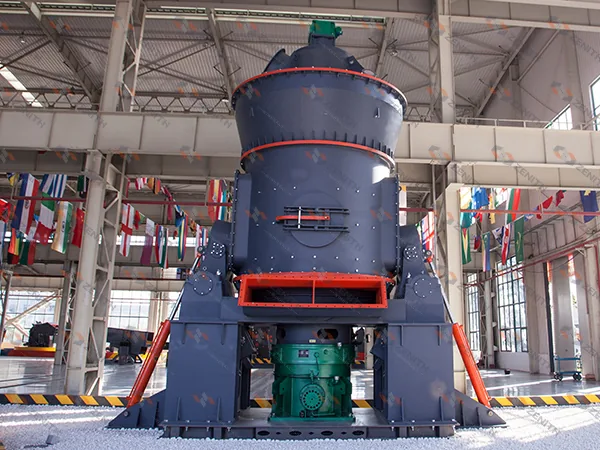
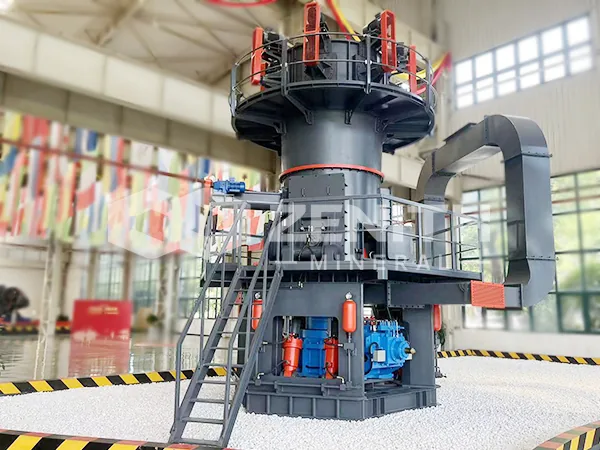
Red Mud Roasted Material Crushing, Ball Milling, Air Separation and Magnetic Separation Line
2025-10-14 11:39:33
This is a highly specialised and specific process. The "crushing – ball milling – air classification – magnetic separation" production line for calcined red mud material is a classic process designed to recover valuable components (mainly iron) from red mud and realise the resource utilisation of this material.
Below is a detailed analysis of the design approach, core equipment configuration and key considerations for this production line.
1. Production line design objectives and process principles
- Raw material: Calcined red mud material. The calcination process removes volatiles and moisture and can convert weakly magnetic haematite (Fe₂O₃) in the red mud into strongly magnetic magnetite (Fe₃O₄) or maghemite (γ-Fe₂O₃), creating the key conditions for magnetic separation and iron enrichment.
- Core objective: To enrich and recover iron from red mud by physical methods, producing high-grade iron concentrate. The remaining tailings can also be used as raw material for building materials and other applications.
- Process principles:
- Crushing and ball milling: The calcined red mud is crushed and ground to liberate the iron ore from the gangue minerals (silica, alumina, calcium and other oxides).
- Air classification: Air-flow classification is used to control the fineness of the final product and to remove some light impurities.
- Magnetic separation: Taking advantage of the strong magnetic properties of the calcined iron ore, a magnetic separator is used to efficiently separate the ore from the non-magnetic gangue.
2. Complete production line configuration and process flow
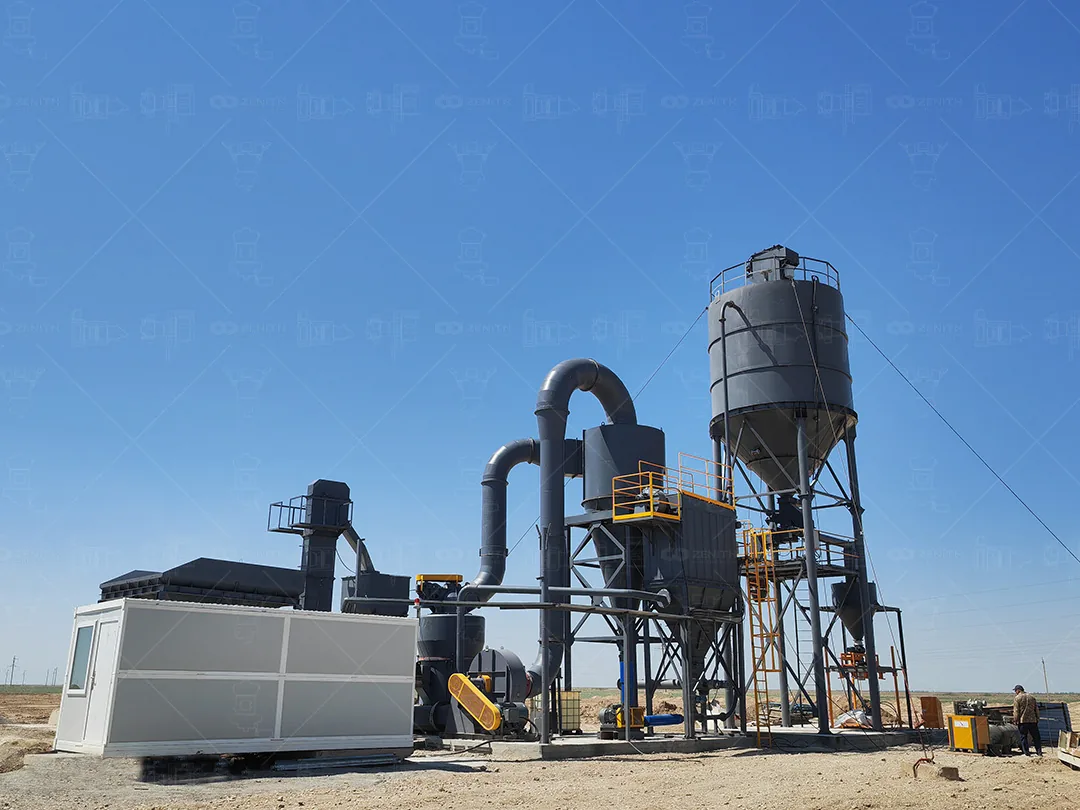
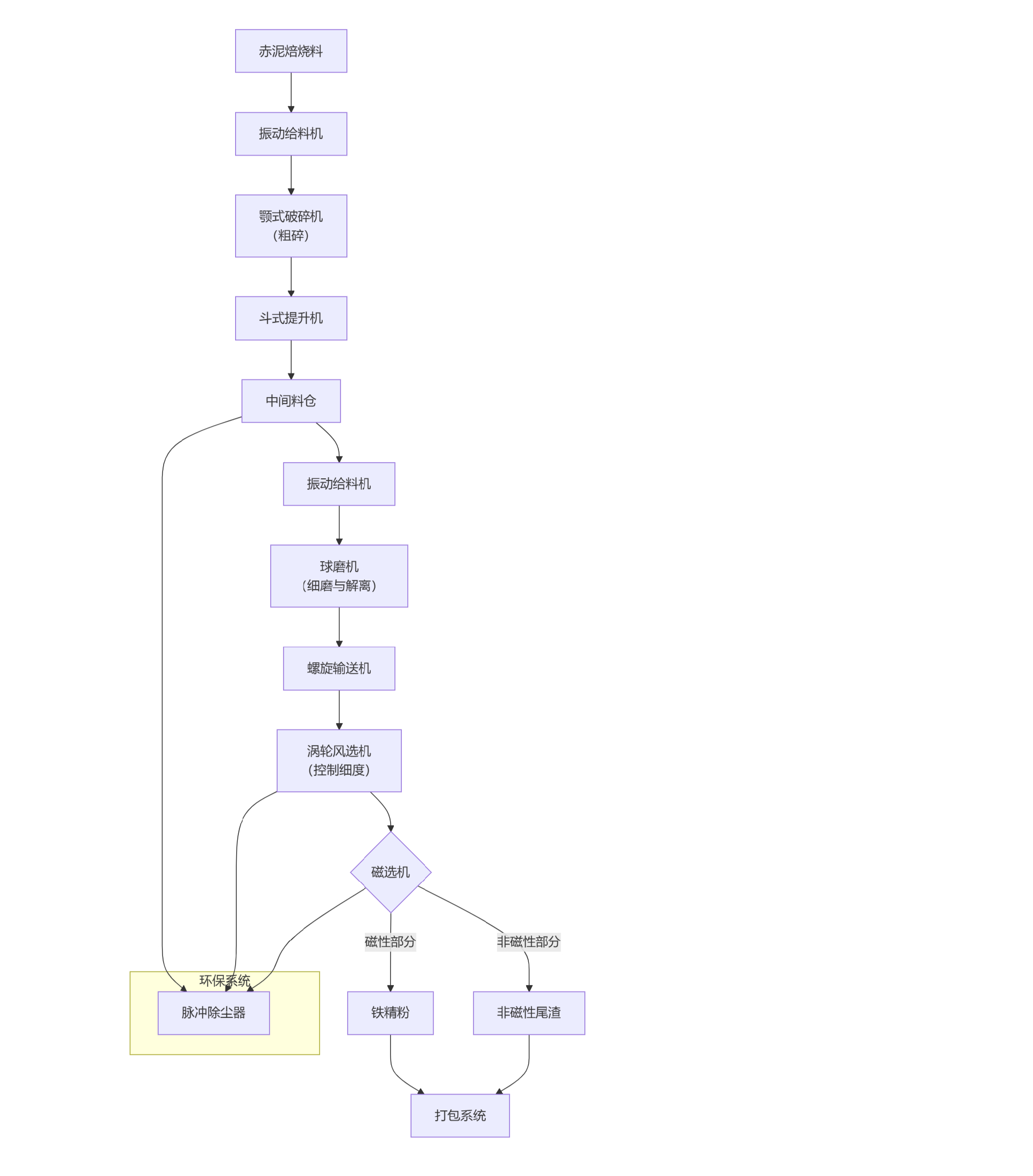
The diagram below clearly illustrates the typical process and core equipment configuration of this production line:
A [Calcined Red Mud Material] --> B [Vibrating Feeder]
B --> C [Jaw Crusher (Coarse Crushing)]
C --> D [Bucket Elevator]
D --> E [Intermediate Silo]
E --> F [Vibrating Feeder]
F --> G [Ball Mill (Grinding and Liberation)]
G --> H [Screw Conveyor]
H --> I [Turbo Air Classifier (Fineness Control)]
I --> J [Magnetic Separator]
J -- Magnetic fraction --> K [Iron Concentrate]
J -- Non-magnetic fraction --> L [Non-magnetic Tailings]
K & L --> M [Packing System]

Auxiliary: Environmental Protection System
N [Pulse Dust Collector]
E & I & J --> N
3. Core equipment selection and key points for each process stage
3.1 Crushing stage
- Core equipment: Jaw crusher.
- Main function: Crush large lumps of calcined red mud (which may be hundreds of millimetres in size) into particles smaller than 30 mm, providing suitable feed for the subsequent ball milling stage.
- Selection requirements: Due to the highly abrasive nature of calcined red mud, the jaw plates must be made of wear-resistant materials such as high-manganese steel or high-chromium cast iron.
3.2 Ball milling stage
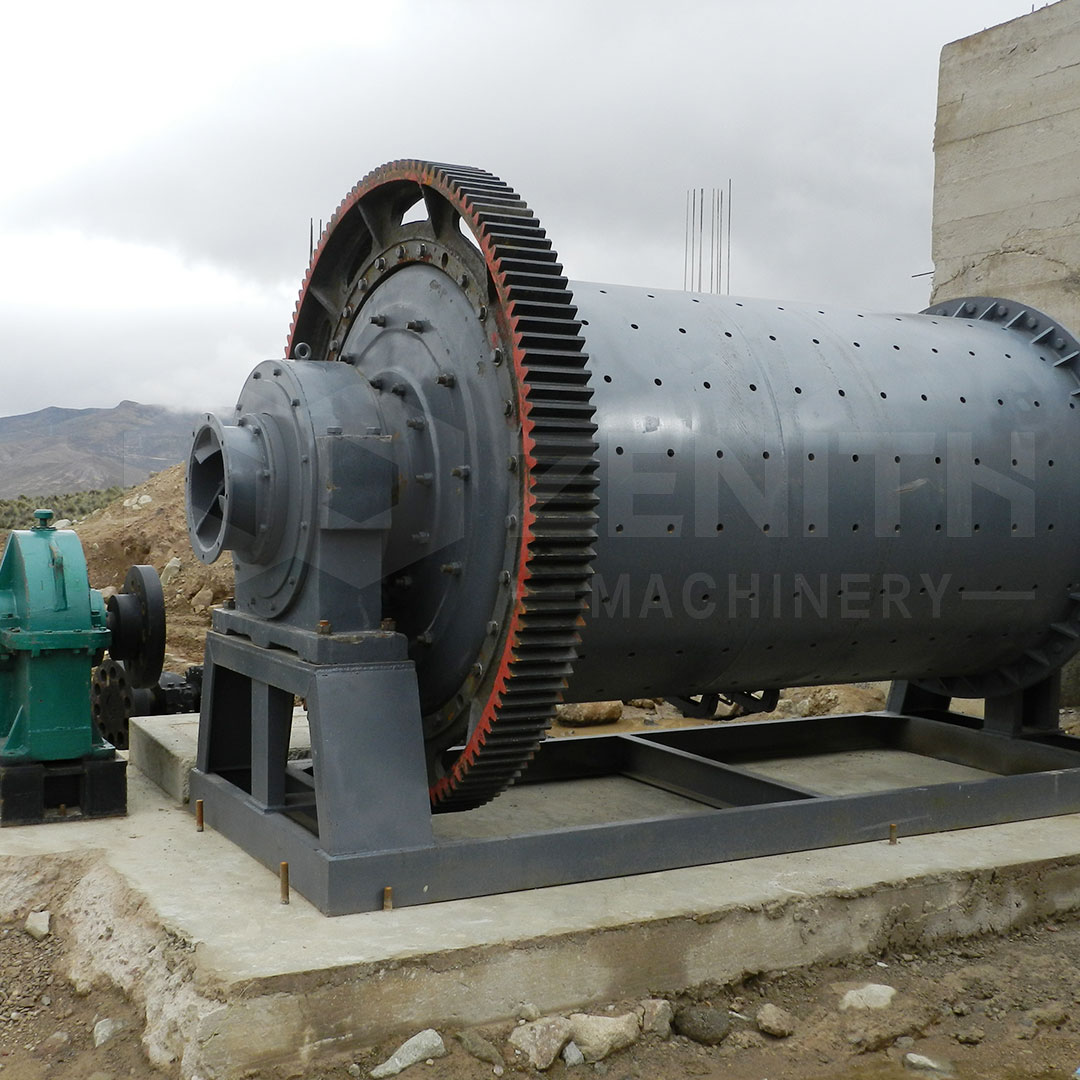
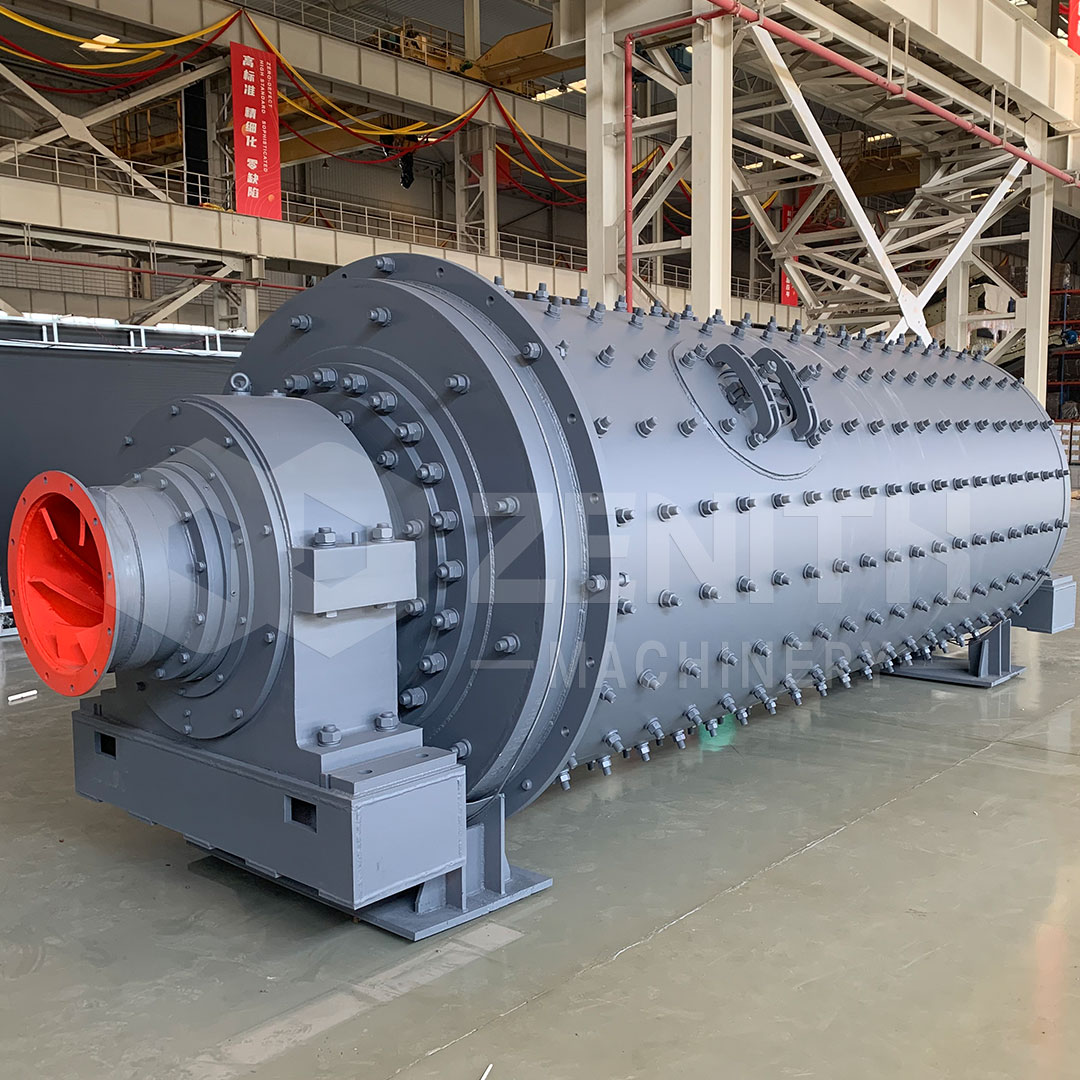
- Core equipment: Ball mill plus its associated screw feeder and bucket elevator.
- Main function: This is the most important step for achieving mineral monomer liberation. Through the impact and grinding action of the steel balls and the material, the particles are ground to the required fineness (usually at least 80% passing -200 mesh), thereby "releasing" the iron mineral particles from their intergrown associations.
- Selection requirements:
- Length/diameter ratio: Either an overflow ball mill or a grate discharge ball mill can be selected.
- Grinding media: Use high-chromium steel balls, which are wear-resistant and cause little material contamination.
- Liners: Also require high wear resistance.
- Energy consumption considerations: Ball milling consumes the most energy in the entire production line and requires particular attention.
3.3 Air classification
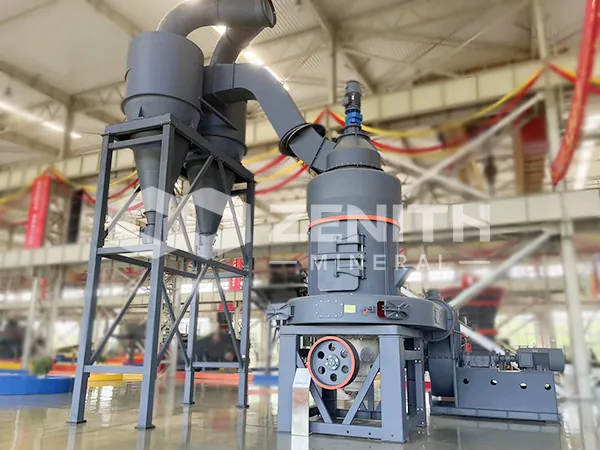
- Core equipment: Turbo air classifier (also called an air classifier).
- Main functions:
- Finished product fineness control: Rapidly separate the fine powder that meets the requirement from the ball mill and return the coarse powder to the ball mill for further grinding, creating a closed circuit and improving grinding efficiency.
- Preliminary enrichment: Can remove some light impurities with low specific gravity and weak magnetic properties.
- Selection requirements: The classifier speed must be adjustable to precisely control the particle size and achieve the optimal feed size for magnetic separation.
3.4 Magnetic separation
- Core equipment: Magnetic separator (a permanent-magnet drum magnetic separator is strongly recommended).
- Main function: This is the core step in iron concentrate enrichment. After the red mud particles have been calcined and magnetised, the highly magnetic iron minerals within them are attracted to the magnetic rollers of the separator, while non-magnetic material is thrown off by centrifugal force, achieving separation.
- Selection requirements:
- Magnetic field strength: A suitable magnetic field strength (usually medium-strong) should be selected based on the specific magnetisation of the iron minerals in the red mud.
- Multi-stage magnetic separation: To obtain high-quality iron concentrate, a multi-stage magnetic separation process of "roughing, cleaning and scavenging" is usually adopted. Specifically, the coarse and fine powders obtained from roughing separation are then cleaned to improve grade, while the tailings from roughing separation are scavenged to recover residual iron.
3.5 Auxiliary and environmental protection systems
- Conveying system: Bucket elevators, screw conveyors, belt conveyors, etc. connect the various process stages.
- Dust removal system: Pulse bag dust collector. Dust extraction hoods are installed at each dust-generating point, including crushing, ball mill discharge, air classification and magnetic separation, to remove dust centrally and ensure a clean and environmentally compliant workshop.
- Electrical control system: PLC central control enables automatic operation and interlocked start/stop of the entire production line.
4. Four key recommendations for investors
- "Test first, design afterwards": The composition of red mud varies depending on the bauxite source and the alumina production process. Before investing, you must take representative samples of the calcined material in order to:
- Mineralogical analysis: Determine the occurrence state of the iron and the magnetisation effect.
- Grindability testing: Determine the energy and steel ball consumption of the ball mill.
- Small-scale continuous testing: Verify the feasibility of the entire "grinding – classification – magnetic separation" process, as well as the quality and recovery rate of the final iron concentrate.
- Focus on wear and corrosion resistance: Red mud has a high pH and high abrasiveness. Therefore, all equipment parts in contact with the material (crushing jaws, ball mill liners, conveying pipes, etc.) must be made of wear-resistant and corrosion-resistant materials.
- Magnetic separation performance is key: The stability of the roasting process directly determines the effectiveness of magnetic separation. It is important to ensure that the roasting process can stably and uniformly convert the iron minerals into a highly magnetic phase.
- Choose an experienced supplier: Give priority to equipment suppliers with successful separation solutions for similar industrial solid waste (such as steel slag and vanadium-titanium magnetite), for example Chinese magnetic separation equipment specialists such as Guilin Hongcheng, Weifang Kelei and Ganzhou Jinhuan.
This production line is technically mature; the key to success lies in carrying out accurate process parameter testing and optimising equipment selection for your specific red mud raw material.