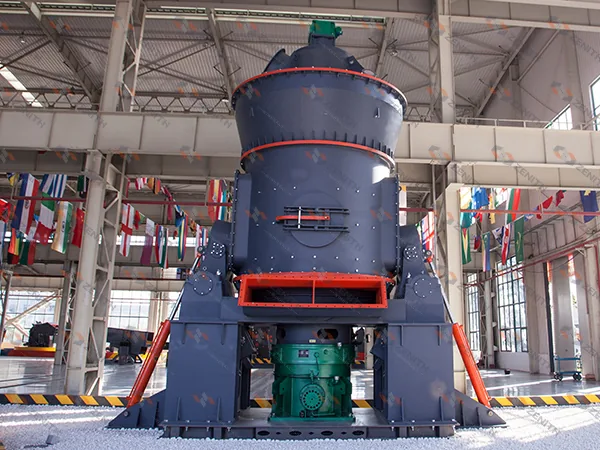
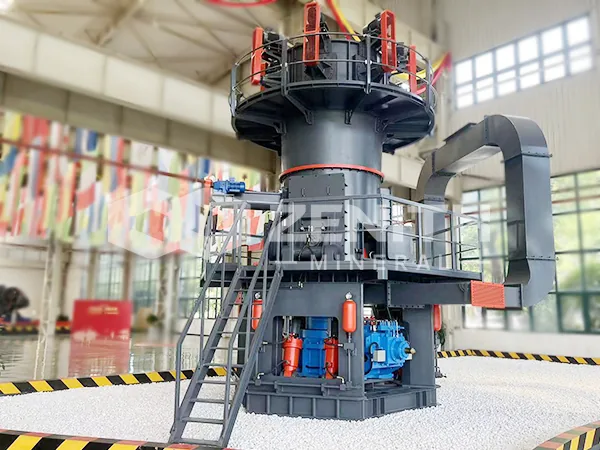
How Is the Quality of Calcite Limestone Grinding Mills Made in China?
2025-10-10 14:31:45
This is a very practical question. Here is a comprehensive and objective analysis of limestone/calcite grinding mills manufactured in China (commonly referred to simply as "mills").
Overall conclusion: Limestone/calcite grinding mills made in China are highly reliable, technologically advanced and offer outstanding value, which makes them highly competitive in the global market. From small and medium-sized mines to large industrial plants, Chinese equipment can meet the demand and is exported worldwide.
Here are the detailed aspects:
1. Quality and technical level
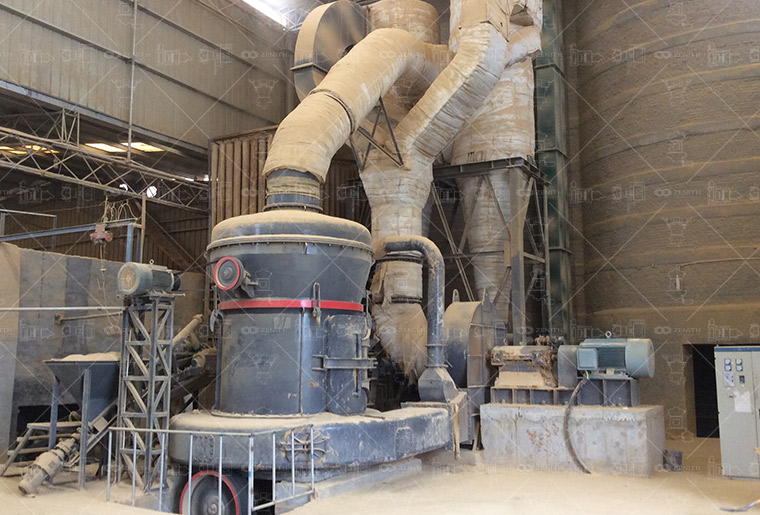
China's grinding mill manufacturing industry is highly developed, and quality can be divided into three tiers:
1.1 Top-tier brands (export-oriented and premium markets)
- Typical companies: Guilin Hongcheng (HLM/HCH), Liming Heavy Industry (MTW/LM), Shanghai Shibang (CM).
- Quality level:
- Advanced technology: These companies all have their own R&D centres. Their vertical mills, ultrafine mills and other technologies are benchmarked against advanced international standards, demonstrating superior performance in energy consumption, wear-part service life and automatic control.
- Fine workmanship: Advanced machining equipment (such as large CNC machine tools and machining centres) is used to ensure the precision and balance of core components such as the grinding disc and rollers.
- High-quality materials: Key wear-resistant parts are made of high-chromium alloy and metal-ceramic composite materials, optimised for the grinding characteristics of limestone/calcite. This ensures long service life, effectively prevents iron contamination and guarantees product whiteness.
- High system integration: These brands provide complete production line solutions covering crushing, conveying, grinding, collection and packing, with a high degree of automation.
1.2 Mid-tier brands (mainstream domestic market)
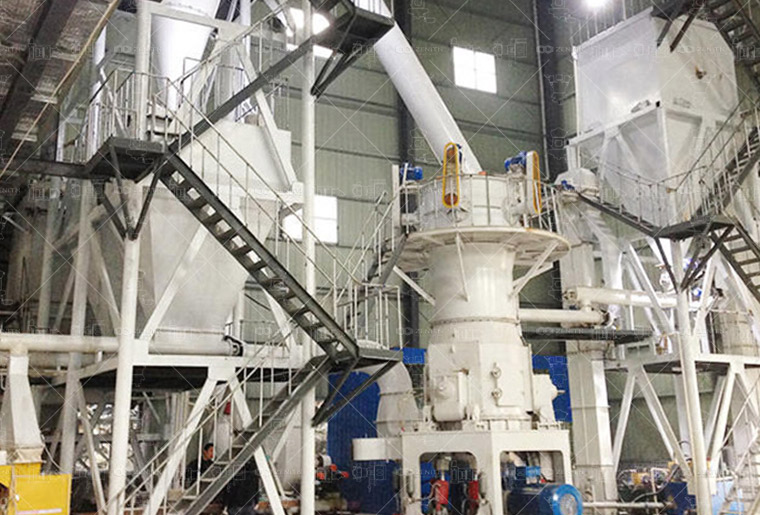
Characteristics: These brands are very diverse and mainly occupy the bulk of the domestic market.
Quality: Their technology is mature and stable, mainly copying or improving on the designs of the top brands. Within the standard fineness range (for example 80-800 mesh), their performance is stable and reliable, fully meeting most production needs. Their greatest advantage is cost-effectiveness, but they may be inferior to top brands in energy consumption, wear-part service life and ultrafine finishing (above 1250 mesh).
1.3 Low-end brands / for small workshops
Characteristics: These brands are mainly based in small factories and workshops in Henan, Shandong and other regions.
Quality: Their prices are extremely low, but quality varies. The main problems may include: rapid wear due to the use of ordinary steel, high energy consumption, low machining precision leading to high vibration and noise, and virtually no after-sales service. They are not recommended for formal industrial production focused on long-term profitability.
2. Main advantages
- Extremely high cost-effectiveness: This is the core competitive advantage of Chinese equipment. For equivalent output and fineness requirements, Chinese equipment typically costs only one third to one half of comparable European equipment.
- Complete product range: From traditional Raymond mills (suspended roller mills) to newer vertical mills, ultrafine ring roller mills and ball mills, a wide variety of types and specifications are available, meeting every processing need from coarse powder (~20 mesh) to ultrafine powder (~2500 mesh).
- Strong customisation capability: Chinese manufacturers are very flexible and can provide custom designs and modifications to meet specific customer needs, such as site constraints, special fineness requirements or high-whiteness requirements.
- Comprehensive after-sales service and spare parts supply: Fast domestic service response, and affordable and readily available spare parts, minimising downtime.
3. Key points to note (how to choose)
Although overall quality is good, you still need to consider the following when purchasing:
- Core wear-resistant materials: Ask clearly about the material of the grinding rollers, grinding disc and grinding ring. For limestone/calcite, high-chromium alloy is a basic requirement, directly affecting equipment service life and maintenance costs.
- Classification system: Finished product fineness is determined by the classifier. Find out about the classifier's structure and speed adjustment capability. A high-precision turbo classifier is essential for continuously producing products of a specific fineness.
- Case studies: Ask the supplier for successful customer case studies with projects similar to yours (material, fineness and output), and if possible, visit them to inspect. This is the best way to verify the actual performance of the equipment.
- "Trial grinding" service: Reputable, established manufacturers offer a free trial service. Send them your raw material and let them grind it for you. The test results (finished product fineness, output and power consumption) will speak for themselves.
- A complete solution, not just a single machine: Check whether the supplier provides a turnkey solution including dust removal, iron removal and automatic control. This can save you a great deal of trouble later.
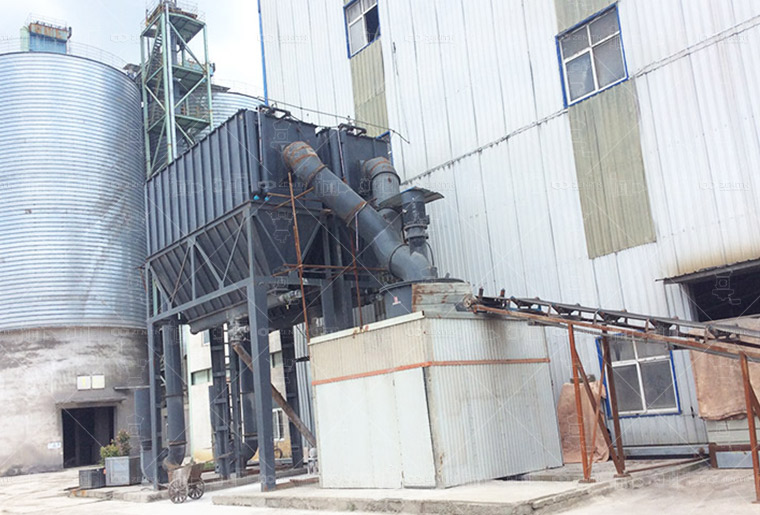
4. Equipment selection recommendations (for limestone/calcite)
- Coarse/fine powder (0-200 mesh): Raymond mill / suspended roller mill or vertical mill — economical and practical.
- Fine/ultrafine powder (200-800 mesh): Strengthened Raymond mill or vertical mill — the vertical mill delivers higher energy efficiency.
- Ultrafine powder (800-2500 mesh): Ultrafine vertical mill or ring roller micro powder mill, which must be equipped with a high-precision classifier.
Summary:
Limestone/calcite grinding mills manufactured in China are generally of excellent quality, especially in the mid-to-high-end market segment. For both domestic and international customers, choosing leading brands such as Guilin Hongcheng and Liming Heavy Industry will ensure you receive high-quality equipment comparable to European and American quality, but at a more competitive price.
The right approach is to clearly define your production volume, fineness and budget requirements, then contact two or three well-known top-tier or mid-tier manufacturers, ask them to provide specific tests and proposals, and then carry out a comprehensive comparison. In this way, you can purchase the most suitable and reliable equipment.